The word slop has been doing a lot of work recently. It circulates in comment sections and creative industry forums, deployed as a shorthand for everything people find unsatisfying about AI-generated content. The flatness, the wrongness, the vague feeling of having been given something and nothing at the same time.
So. What is slop? It probably bears definition if we’re going to think about it. Here’s my guess that you may want to agree or disagree with; All slop is synthetic. It is machine-generated content. But not all AI-generated content is slop.
Slop is characterised by two things. It is low-effort in a specific sense: not necessarily in the sense that it took little time to produce, but in the sense that no meaningful human judgement was invested in its creation. And it is, in many cases, uncanny. It produces a response in the viewer or reader that is hard to immediately name but is immediately felt. A subtle wrongness. A slight but persistent sense of having been handed something that is not quite real.
These are two threads I found myself wanting to pull on. One thread about creativity and what it actually is. Another about how human perception works and why we are so well equipped to detect the absence of “real” things.
Creativity is communication
My working example is DJ’s. For a long time, and in some quarters still, the DJ was not considered a real musician. The argument was straightforward: they were playing other people's records. There was no instrument, no original composition, no creative act in the traditional sense. The DJ was a kind of a sophisticated jukebox.
Culture, over time, concluded otherwise. We now understand DJing as a genuine creative practice and the best DJs as genuine artists. The reason for that reappraisal is instructive. What a great DJ is doing, when you examine it carefully, is not merely playing records. They are making a continuous series of decisions about music selection that reflect deep knowledge of a genre, its history and its possibilities. They are reading a room in real time, watching the response of a crowd and adjusting. They are shaping a mood, building something that functions like a narrative or an emotional arc. The set, in the hands of a great DJ, is a vehicle for communication. The music is the language.
When you understand it this way, it becomes clear why an AI-generated DJ set is categorically different, regardless of its technical quality. The AI set may be perfectly mixed. The key relationships may be correct, the transitions smooth, the BPM consistent. But there is no one at the other end of the communication. No taste, no perspective, no reading of the room. It is music arranged by an algorithm. It is not a conversation.
This distinction, between technical competence and communicative intent, is at the heart of what I think makes slop feel wrong. And it applies well beyond music.
Consider the full range of what we might charitably describe as weak human creative work. I think in the 80s this was called “schlock”. The earnest amateur painting that hangs slightly wrong on a wall. The local am-dram production where the acting is terrible but everyone in the audience can see the effort. The bad advertising. Even at its worst, human creative output carries within it some trace of the attempt. Someone sat down and decided to make something. The communication may have failed entirely and the execution may be embarrassing but intention was present.
Advertising is a useful lens here because it exists on a spectrum that most people have experienced at close range. The best advertising is remarkable because it transcends the commercial transaction entirely - think about the annual John Lewis ad that somehow still seems to get traction on social media for the “feels”. Even in our attention deficit age, a lavish, wry, funny and poignant ad can tap into something real in culture. It hopefully makes you feel something, communicates a genuine point of view. It enters the conversation.
The worst advertising is just too direct, or too obvious, or tone-deaf in a way that makes you feel targeted rather than spoken to as it fails to connect. But even bad advertising has the fingerprints of human decision-making on it. Someone chose those words, that image, that argument. Someone was trying, even if they did not succeed.
Remove the human layer and something fundamental changes. The work is no longer merely weak. It is empty in a different way entirely.
We don’t like wonky
The reaction to slop is not purely aesthetic or intellectual. It is instinctive and the mechanism behind it seems deeply wired into how humans perceive the world.
We are, as a species, extraordinarily sophisticated pattern recognition machines. Evolution has equipped us to detect wrongness at a level well below conscious thought. We notice when something is “off” before we know what the even something is.
This ability has served obvious purposes in our deep past: the person who was moving slightly strangely, the food that smelled almost right, the situation that seemed fine on the surface but produced a feeling of unease that was difficult to articulate. The brain is always running these checks, comparing what it perceives against its vast accumulated model of normal.
Psychologist Paul Ekman's work on universal human expressions is relevant here. Ekman identified seven fundamental emotions: happiness, sadness, fear, anger, disgust, surprise and contempt. All are expressed and recognised across all human cultures. These are not learned responses, says Ekman, they are the innate, hardwired operating system of our brains coded for at a genetic level and they read the same way regardless of where in the world someone grew up. When these signals are transmitted inaccurately, or when something produces the form of these signals without the substance, we react immediately and viscerally. Something is wrong. We know it before we can say why.
This is the foundation of the so-called uncanny valley effect, first described by robotics professor Masahiro Mori in 1970. The closer something gets to human without quite achieving it, the stronger and more unsettling the feeling of unease. The effect is well documented in robotics and computer animation, where audiences react with discomfort to figures that are almost but not quite right. But the principle extends further than its origins.
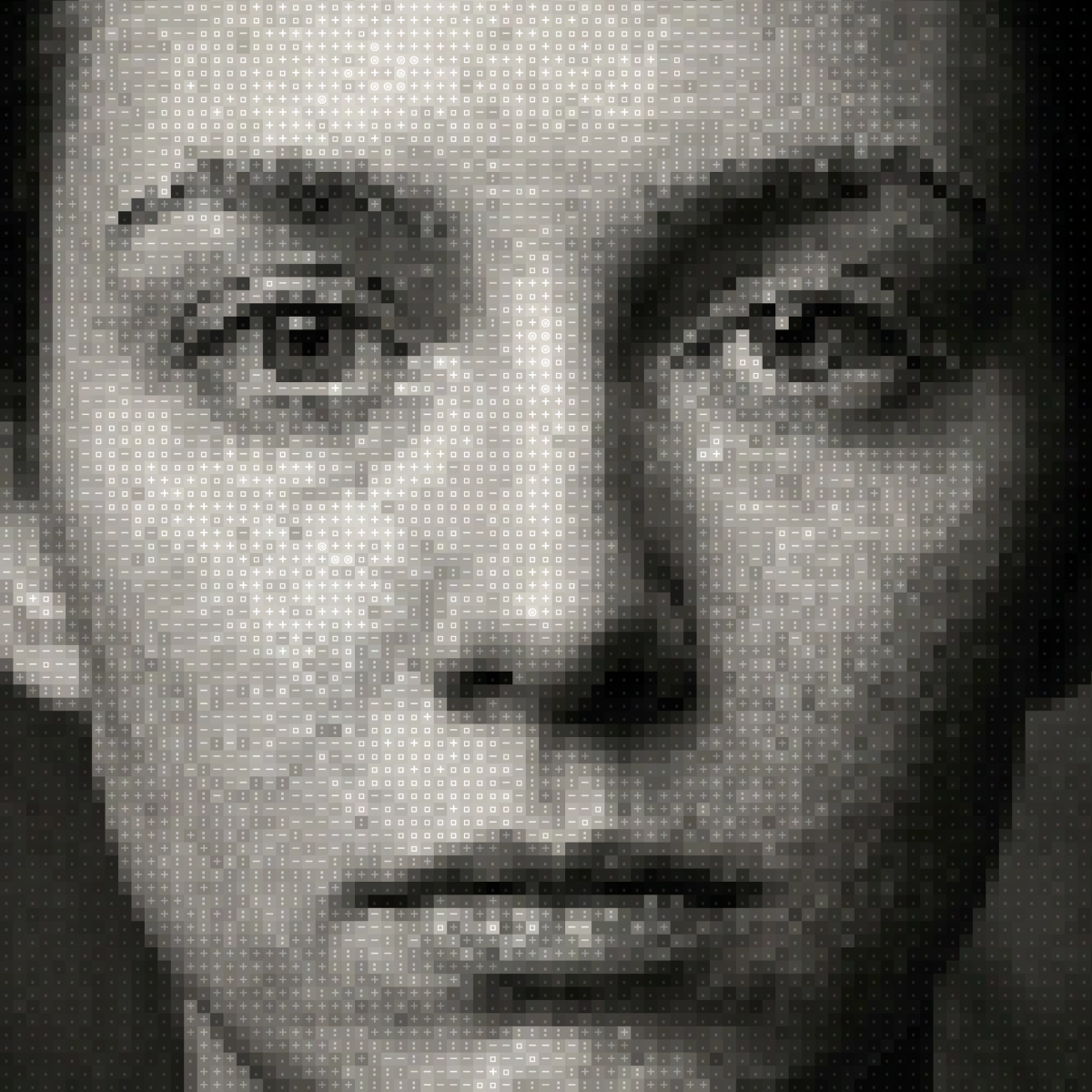
Slop triggers this in several ways. AI-generated images of people produce the effect directly; something in the eyes, the proportions, the texture of the skin is slightly wrong and we feel it before we can describe it. But the uncanny quality appears more broadly too. AI images of objects or scenes can feel too perfect, too clean, lacking the imperfections and contingency of the real world. AI video can seem entirely convincing until a movement or a light source behaves in a way that is subtly inconsistent with physics, and then the whole thing feels wrong.
AI writing has developed its own well-documented uncanny signatures: certain patterns and verbal habits that readers now recognise, even if they could not name them. The prose is competent. It may even be fluent and well structured. But the personality feels absent or the personality feels approximate. AI copy is a mechanical piano - it knows the notes without knowing the music.
Smash the machine
The most common response to all of this is to conclude that AI is the problem and that is completely understandable. I’m not sure though when we compare how successful slop is in terms of reader or viewership vs. how people tend to say they feel about it.
In fact, despite me worrying a lot about slop, slop is doing great! It’s big business.
Slop seems to thrive in environments where it was already welcome or at least slop-like content always was. Taking TikTok and the broader social media content economy as an example, there is an enormous and growing volume of AI-generated content on those platforms and a significant amount of it performs well by the metrics those platforms measure.
The incentive structure of social media has always rewarded volume, frequency and immediate engagement over quality, depth or craft. The audience for that content is not asking for something nourishing most of the time, they are asking to be occupied for thirty seconds. In that context, AI is not a degradation of something good. It is a natural fit for a system that was already optimised for something other than quality. Criticising AI for producing slop on TikTok is a bit like being surprised that a vending machine does not serve a particularly good meal.
The analogy that feels most apt is ultra-processed food. Engineered for immediate palatability, optimised for mass consumption, stripped of nutritional value in the process of being made maximally easy and instantly satisfying. I may not like it but there is a vast and evidently enthusiastic market for it. It is not going away, but no one who eats it is being nourished. They are getting a dopamine response and the distinction matters more than we tend to acknowledge.
I must conclude then that the problem in both cases is not really the tool. It is the questions being asked of it.
When AI produces slop and people notice, one of two things has gone wrong. Either AI was used for a task that genuinely required human intention and creative judgement and that was simply the wrong tool for the job. Or the output was not good enough and the person deploying it lacked the discernment to recognise that before it went out into the world. A delegation failure or a discernment failure. These are both solvable issues and neither is an argument against AI per se. They are really problems with humans and what we have decided to use our amazing new toolbox to achieve.
It seems we have created software that communicates with us better than anything we’ve ever made. But AI does not create communication. It produces content.
When you need content: documentation, summaries, first drafts, volume output for contexts where volume is genuinely what is required, it is a powerful and legitimate tool.
When you need communication, when you need something that carries intention and perspective and the unmistakable sense of a human sensibility behind it, you need humans.
Get that distinction right and the slop problem solves itself.